The tragedy of the commons is one of the most documented and least understood patterns in human organisation. Ecologist Garrett Hardin named it in 1968, but the structure he described was ancient. Meadows dedicates significant attention to it in Thinking in Systems because it is one of the clearest illustrations of how individually rational behaviour can produce collectively irrational outcomes — not because people are greedy or short-sighted, but because the system they are inside provides no feedback mechanism that connects their individual use of a shared resource to the resource's depletion.
The original example is a shared pasture. Each farmer benefits from grazing more animals. The cost of overgrazing is shared across all farmers. So each farmer, acting rationally, grazes as many animals as possible. The result, predictably, is the destruction of the pasture — a loss that is worse for every farmer than if each had moderated their use.
I want to apply this structure to three resources that African startup ecosystems are currently over-extracting, because I think understanding the pattern is one of the most practically important things a founder building in Africa can do.
The talent commons.
Ghana has a finite pool of senior engineers, experienced product designers, seasoned marketing professionals, and capable operations managers at any given time. The pipeline that produces new ones — universities, bootcamps, informal learning — produces a fixed number per year. This is a commons.
When well-funded startups — often backed by foreign capital with aggressive growth timelines — compete for this talent by bidding salaries above what the market can sustainably support, they extract from the commons in a way that harms everyone. They harm smaller companies and social enterprises that cannot match the salaries. They harm the quality of the work being produced because senior professionals are being hired before they are ready, promoted before they have the skills, and rotated through companies at a velocity that prevents deep expertise from accumulating anywhere. And they harm themselves — because the talent they have bid for at inflated costs cannot consistently deliver at the level the price implies.
The solution Meadows identifies for common problems is either mutual coercion mutually agreed upon (regulations, caps, standards) or privatisation (each user owns their share of the resource and has an incentive to manage it sustainably). In the talent context, the version of this that works is long-term investment in the commons itself — building talent pipelines, creating professional development infrastructure, establishing quality standards that expand the resource rather than extracting from it.
This is exactly what Xcuxion Labs and Guild are designed to do. Labs produces trained, real-company-building engineers and founders. The Guild develops professionals to a defined standard and verifies them before they are deployed. These are not just commercial ventures — they are commons infrastructure. They expand the resource pool rather than extracting from it. A company that invests in developing talent, rather than only competing to hire it, is making a high-leverage commons intervention.
The investor attention commons.
There is a finite number of investors who are willing and able to deploy meaningful capital into early-stage African tech companies at any given time. Their attention — the time they spend evaluating opportunities, developing relationships, and forming conviction — is a commons.
When founders send poorly prepared pitch decks, pursue investor relationships without doing basic homework on thesis fit, or treat investor introductions as something to be collected rather than relationships to be developed, they extract attention from the commons without adding value. The result: investors become more guarded, more selective in who they take meetings with, and quicker to dismiss inbound approaches. The pool of effectively accessible investor attention shrinks for everyone — including the founders who would have used it well.
The discipline that high-quality investor engagement requires — a focused narrative, documented evidence, a clear ask, thoughtful follow-up, respect for the investor's time and intelligence — is not just good manners. It is commons stewardship. Every founder who conducts investor relationships well makes the ecosystem slightly more accessible for the next founder. Every founder who extracts attention carelessly makes it slightly less accessible.
The customer trust commons.
This is the one that concerns me most. African consumer and enterprise customers have been burned repeatedly by tech products that promised transformation and delivered disappointment. Mobile money frauds. App subscriptions that charged but did not deliver. Enterprise software that was beautifully pitched and barely functional. Each of these extraction events depletes a commons — the trust that customers extend to new technology products.
When customer trust is depleted, the cost of building a new product goes up for everyone. Customer acquisition costs increase because scepticism is higher. Sales cycles lengthen because due diligence is more thorough. Churn rates increase because customers maintain distance even from products that are genuinely good. The bad actors in the ecosystem have extracted from the trust commons and left the bill with everyone else.
The solution is not to be angry at bad actors. The solution — Meadows would say — is to design feedback mechanisms that connect individual extraction to individual cost. In the customer trust commons, that means: make the cost of a bad product experience visible and attributable. This is part of what oper8's financial transparency and governance systems do. A company with investor-ready governance, documented financial records, and published product milestones is making a commitment that is costly to violate. The transparency is a credibility deposit into the trust commons, not just a fundraising tool.
Every founder who builds a product that does what it says, delivers what it promises, and communicates honestly about what it does not yet do is contributing to a commons that every other African founder benefits from. You are not just building your company. You are building the conditions under which building in Africa becomes easier for everyone who comes after you.
The structures Senge would recognise.
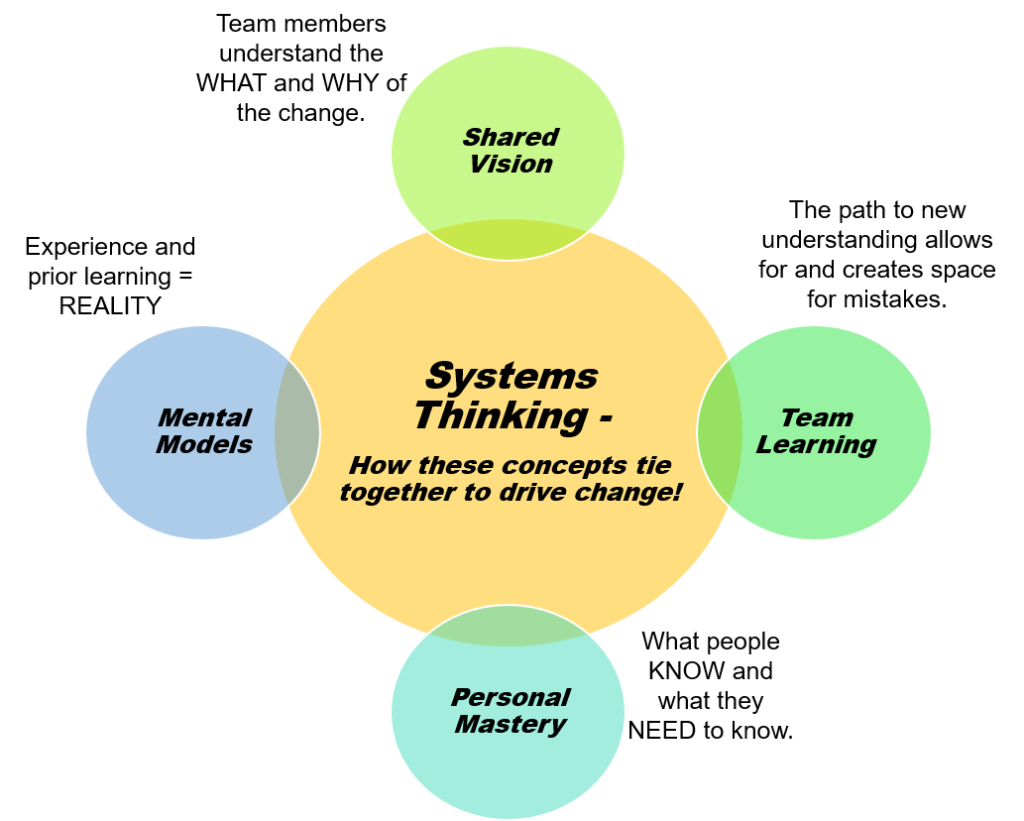
Senge describes a related pattern in The Fifth Discipline that he calls "tragedy of the commons" in the organisational context — specifically, the way that individual teams within an organisation extract from shared resources (budget, management attention, engineering capacity, political capital) in ways that collectively undermine the organisation's health.
The pattern is structurally identical whether the commons is a shared pasture, a talent pool, or an organisation's reserves of goodwill and capability. Individual rational action depletes a shared resource. The depletion is not visible to any individual actor because the feedback between individual use and collective cost is delayed and diffuse. By the time the depletion is obvious, it is too late for incremental correction.
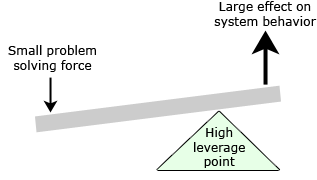
The leverage point, in Senge's framing and in Meadows', is at the level of structure, not behaviour. You cannot solve a commons problem by asking everyone to be less selfish. Individual behaviour is rational given the structure they are inside. You solve it by redesigning the structure so that the feedback between individual use and collective cost becomes visible, immediate, and attributed. When using more costs the user more — directly, unambiguously, now — the tragedy does not have to happen.
For African startup ecosystems, designing this feedback structure requires institutional action: industry associations that set and enforce quality standards, peer networks with genuine accountability rather than performative solidarity, investor communities that collectively reward founders who build sustainable and punish founders who extract and disappear.
None of this is the responsibility of any single company. But every company that operates with integrity — that builds honestly, treats its customers well, develops its talent rather than extracting it, and contributes to the ecosystem more than it takes — is doing the structural work. Not because it is moral, though it is. Because it is the rational choice for any actor who understands the commons they are inside and intends to be building in it for the long term.
This is Post 4 of 7 in the Systems Founder series.