There is a founder I know — I will call him Kwame, which is not his name — who built a genuinely excellent B2B software product for mid-sized Ghanaian manufacturing companies. The product worked. Customers who used it reduced their operational waste significantly. The ROI was documented and real.
Kwame could not close deals. Not for want of trying. He was persistent, articulate, and technically credible. He had referrals from happy customers. He had case studies. He had competitive pricing. And yet the sales cycle was brutal — months of conversation that frequently ended in silence.
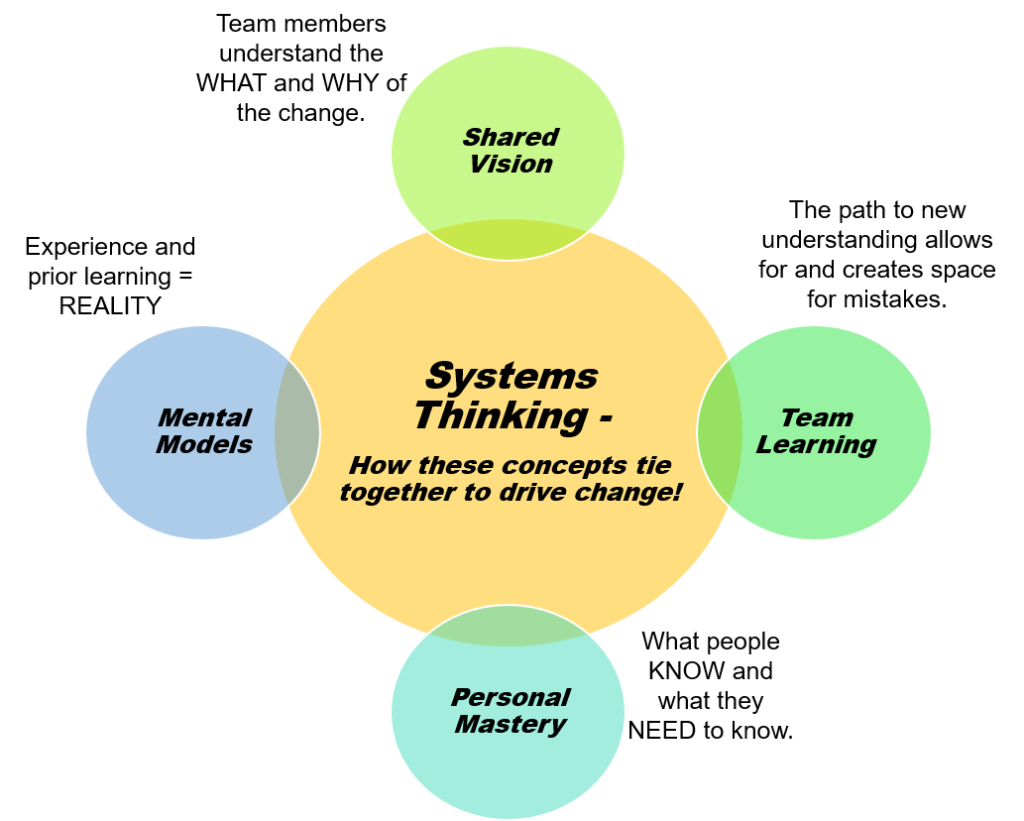
When we sat together and mapped the problem, what emerged was not a sales skills problem. It was a mental model problem. Kwame had an unexamined belief — absorbed from his engineering education and reinforced by the Western startup content he consumed — that a good product, demonstrated clearly and priced correctly, should sell itself to a rational buyer. The decision, in his mental model, was a technical one: Does this product produce value? Yes or no.
But the actual decision-making structure in Ghanaian mid-sized manufacturing companies was deeply relational. The managing director who could approve the purchase was rarely in the room for Kwame's demos. The operations manager who attended the demos had no approval authority. The real decision involved the MD's trust in the vendor — often established through personal introduction, extended relationship, and the opinion of respected peers — none of which were being addressed by Kwame's excellent product demonstrations.
Kwame's mental model about how B2B decisions are made in his market was wrong. And because it was invisible to him, he had spent eighteen months optimising his sales process against a model of buyer behaviour that did not exist.
This is what Senge means when he writes that mental models determine not just how we see the world, but what we can see in it.
What mental models are and where they come from.
Senge defines mental models as deeply ingrained assumptions, generalisations, or even pictures or images that influence how we understand the world and how we take action. They are not beliefs we have consciously chosen. They are the accumulated residue of every experience, education, cultural transmission, and reinforced pattern of success and failure in our history.
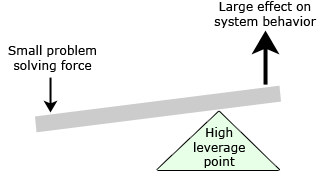
Meadows makes the same point from a different angle. In her leverage point hierarchy, paradigms — the shared ideas, assumptions, and values that a system's goals and rules are built on — are among the most powerful places to intervene. And the paradigms that run a company are mostly the unexamined mental models of the people at the top. Not the stated values on the website. The actual operative beliefs about how customers behave, how markets work, how people are motivated, and how change happens.
For African founders specifically, there are several mental models that I see operating with particular persistence and particular damage.
The "educated customer" fallacy.
Many founders building technology products in Africa operate with an unexamined mental model that looks something like this: customers who understand the problem and understand the solution will adopt the product. The primary task, therefore, is education — explain the value clearly enough, demonstrate it credibly enough, and adoption will follow.
This is wrong in almost every African market at almost every stage of adoption for almost every category of product.
Adoption in Ghana and across West Africa is not primarily determined by understanding. It is primarily determined by trust, social proof, and risk perception. A smallholder farmer in the Ashanti region who fully understands that a digital crop insurance product would protect her livelihood will still not buy it if she does not trust the company offering it, if she has not heard of a person she knows who has used it and been paid out, and if the process of claiming payment seems uncertain or bureaucratic.
The mental model that "understanding produces adoption" leads founders to over-invest in content, demonstration, and education, and to under-invest in trust-building, reference customer development, and risk reduction. The sales motion is oriented around the wrong bottleneck.
Updating this mental model — replacing "adoption follows understanding" with "adoption follows trust, reduced by perceived risk, accelerated by social proof" — changes the entire product and go-to-market strategy. It is not a small adjustment. It is a paradigm shift within the business.
The "best product wins" fallacy.
Closely related but distinct: the belief that markets reliably select the best product over time, and that therefore the primary competitive strategy is product quality.
In mature markets with dense information flows, low switching costs, and transparent competitive comparison, this is approximately true. In African markets — where information is asymmetric, switching costs are often hidden and social, distribution is highly heterogeneous across geographies, and customer relationships carry enormous weight relative to product features — it is frequently false.
The product that wins in Africa is very often not the best product. It is the best-distributed product. The product with the deepest relationships in the right distribution channels. The product whose brand is trusted by the specific community making the purchase decision. Jumia did not win in African e-commerce because it had the best technology. It won because it built a logistics network and established a brand in markets where logistics and brand trust were the primary barriers.
Founders who have absorbed the "best product wins" mental model allocate disproportionate resources to product development and insufficient resources to distribution, relationships, and brand. They optimise for the metric that their mental model says determines success. The market does not agree with their mental model. The market produces outcomes that feel unfair and inexplicable, but are perfectly rational once the actual decision-making structure is understood.
The "speed is safety" fallacy.
Senge describes a mental model that is particularly prevalent in organisations under pressure: the belief that moving fast is itself a form of safety. If you are moving fast enough, problems cannot catch you. If you are shipping fast enough, the market will forgive your errors. If you are growing fast enough, fundraising will stay open.
This mental model is not entirely wrong — in certain contexts, speed genuinely matters. But it becomes dangerous when it is applied uniformly regardless of context, and when it crowds out the kind of reflective thinking that systems literacy requires.
In African markets, where feedback loops are long and delays are substantial, speed without reflection is one of the fastest paths to compounding error. A decision made in January based on an incomplete model of market behaviour will produce feedback signals in March or April. If the founder has made three more decisions on top of the original one before the feedback arrives, the error is embedded in the system at multiple layers. Unpacking it requires unmaking decisions that are already operationally embedded — which is expensive, slow, and demoralising.
The discipline that Senge advocates — and that I am convinced is more valuable in high-delay African markets than anywhere else — is what he calls "inquiry" alongside "advocacy." Most founders are highly skilled at advocacy: making the case for a position, arguing for a decision, pushing a direction. They are much less skilled at inquiry: genuinely interrogating the assumptions behind a position before committing to it, sitting with uncertainty before resolving it, asking what would have to be true for this decision to be wrong.
Slowing down for inquiry does not mean moving slowly. It means that the actions you take are grounded in a more accurate model of the system, which makes them more effective and less likely to require expensive reversal. It is not a speed trade-off. It is a quality-of-action trade-off that almost always produces faster real progress than unexamined fast movement.
How to surface your mental models.
The most practical technique from Senge for working with mental models is one he calls the "ladder of inference" — a description of the mental process by which we move from observable data to beliefs and action. The rungs of the ladder go: observable data → selected data (we filter what we pay attention to) → interpreted data (we apply meaning based on prior experience) → assumptions (we add assumptions that feel like facts) → conclusions → beliefs → actions.
The problem is that this entire process is nearly instantaneous and mostly unconscious. We experience our beliefs as obvious truths, not as the end product of a chain of inference built on a particular selection of data viewed through a particular interpretive lens. And we act on our beliefs with the confidence of people who think they are responding to observable facts.
The discipline of surfacing mental models requires interrupting this process — slowing it down enough to ask: what data am I actually working with? What am I choosing to pay attention to and what am I ignoring? What prior experience is shaping my interpretation? What assumptions am I treating as facts? Could someone else, looking at the same situation with a different history, reach a different conclusion? And if so, whose conclusion is more accurate given the actual structure of the system?
This is not comfortable. It requires a kind of intellectual humility that is genuinely hard to maintain under the pressure that every founder lives with. But the alternative — building a company on the foundation of unexamined mental models that are wrong about your market, your customers, and your own capabilities — produces predictable failure patterns that no amount of hard work can overcome.
The mental models are the operating system. Everything else runs on top of them. Get the operating system wrong and no application layer, no matter how well-built, will produce the outcomes you need.
This is Post 5 of 7 in the Systems Founder series.